


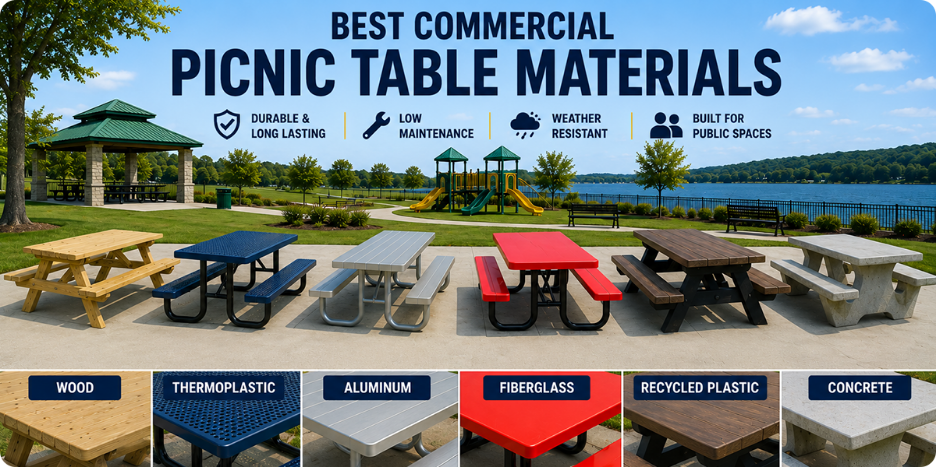
Choosing the right commercial picnic table material is one of the most important decisions you will make when furnishing an outdoor space. The material affects durability, maintenance, appearance, cost, comfort, and how well the table performs in your specific environment.
Whether you are buying picnic tables for a park, school, campground, restaurant patio, HOA, resort, or municipal property, the best material depends on how the table will be used and where it will be installed. This guide compares thermoplastic steel, recycled plastic, aluminum, wood, fiberglass, and concrete picnic tables so you can make a confident buying decision.
Quick Recommendation: Best Picnic Table Material by Need






Comparing the Most Popular Picnic Table Materials
Thermoplastic Steel Picnic Tables
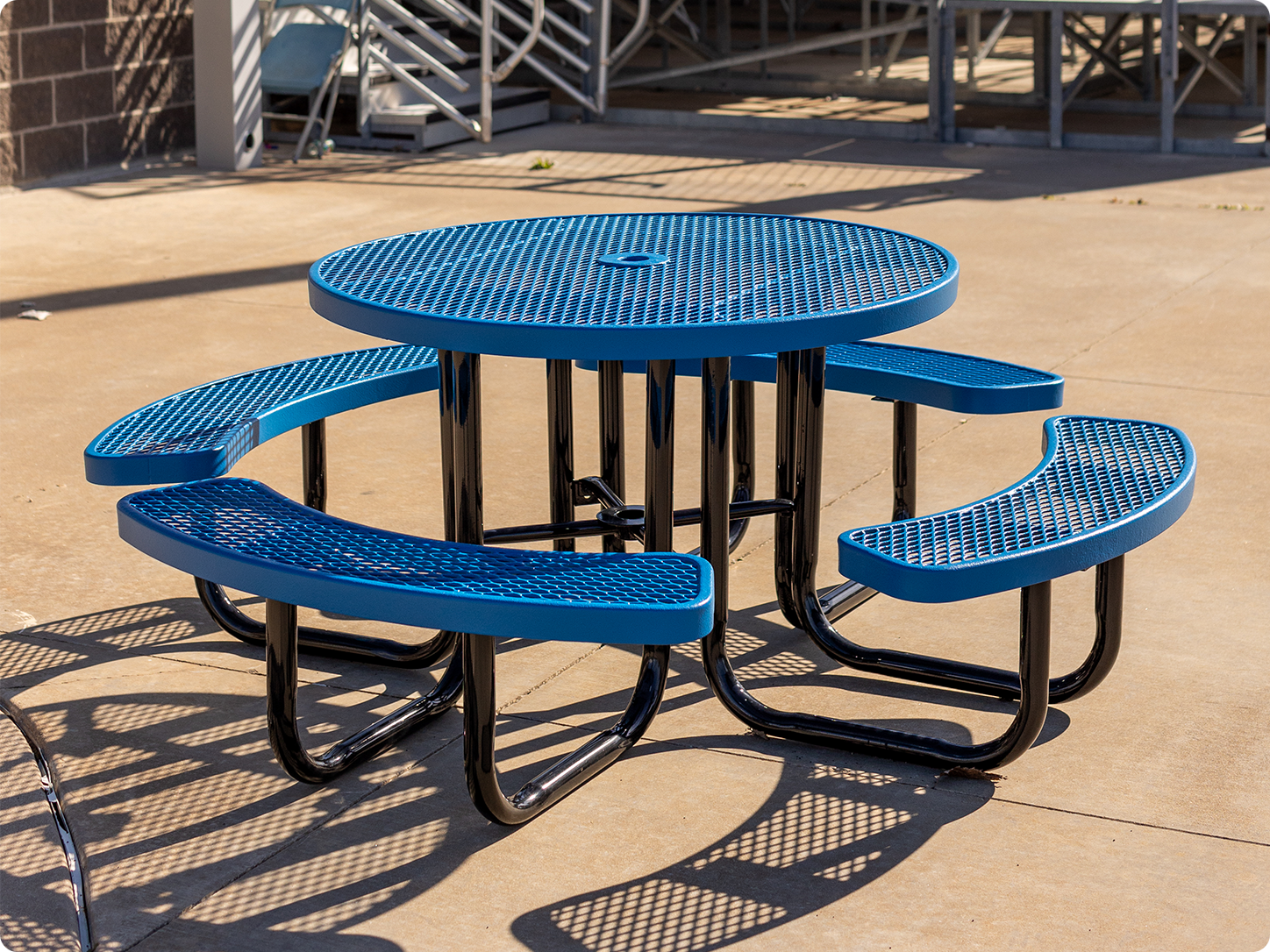
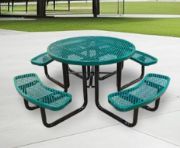
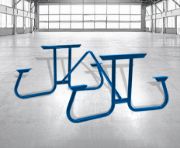
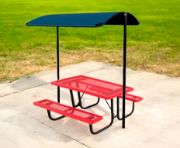
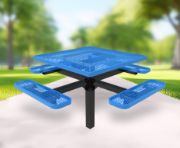
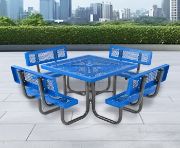
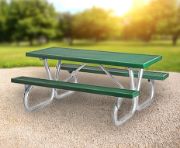
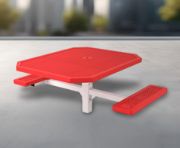
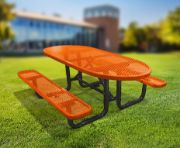
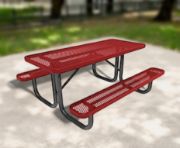
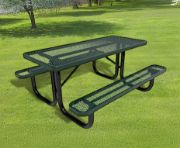
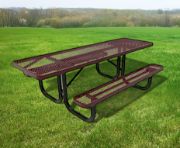
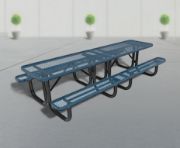
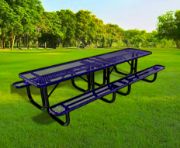
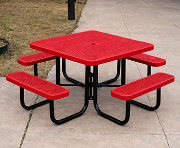
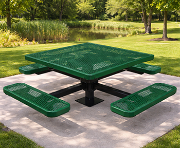
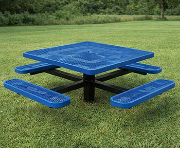
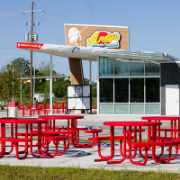
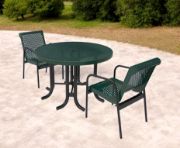
Thermoplastic steel picnic tables combine heavy-duty steel construction with a protective thermoplastic coating that helps resist weather, vandalism, and daily public use. They are one of the most popular materials for parks, schools, municipalities, and other high-traffic commercial environments.
- Excellent weather resistance
- Low maintenance
- Available in many colors and styles
- Ideal for high-traffic public spaces
Recycled Plastic Picnic Tables
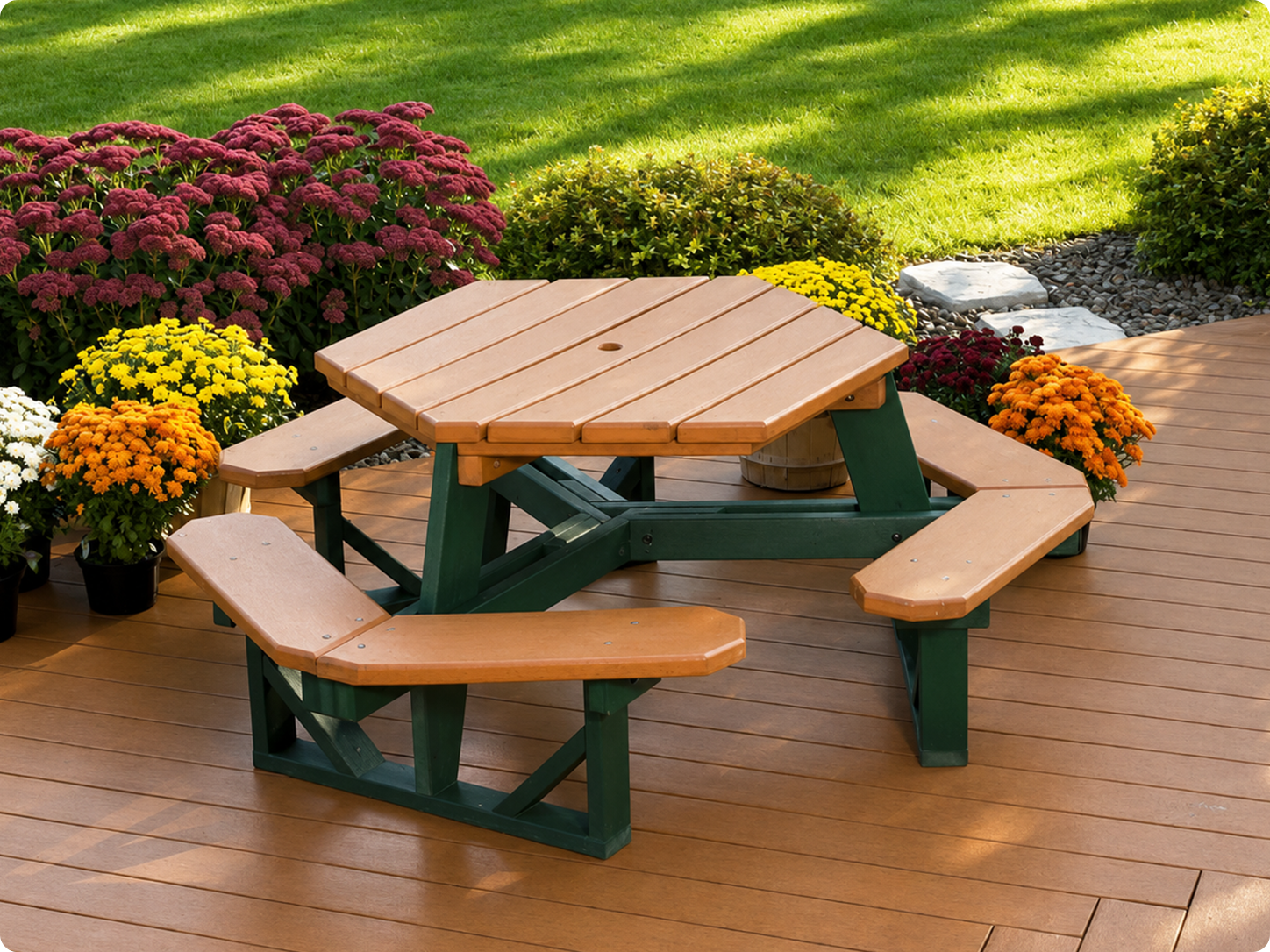
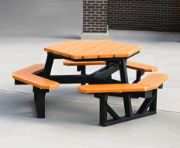
Recycled plastic picnic tables are a great option for buyers who want long-term outdoor performance with very little maintenance. They do not require staining or sealing and are often used in parks, HOAs, resorts, schools, and outdoor dining areas.
- Very low maintenance
- Resistant to moisture, insects, and rot
- Good option for properties wanting a clean finished appearance
- Often has a higher upfront cost than some alternatives
Aluminum Picnic Tables
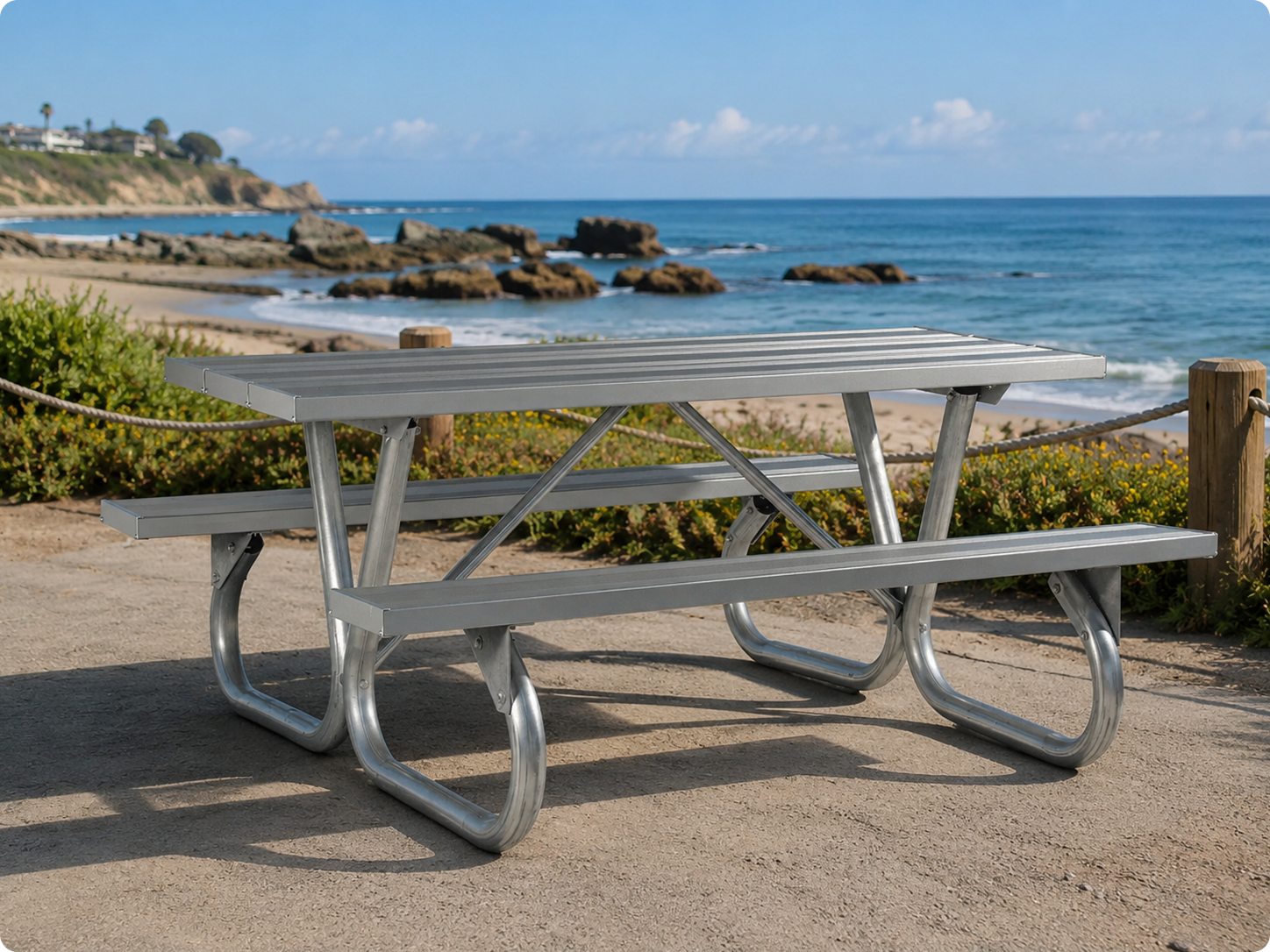
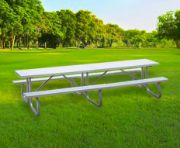
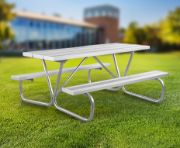
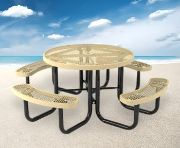
Aluminum picnic tables are lightweight, corrosion resistant, and practical for locations where tables may need to be moved or cleaned frequently. They are especially useful in coastal areas, pool decks, restaurant patios, and waterfront settings.
- Excellent option for salt-air environments
- Lightweight compared to many other materials
- Low maintenance and easy to clean
- Practical for areas where tables may need to be moved
Wood Picnic Tables
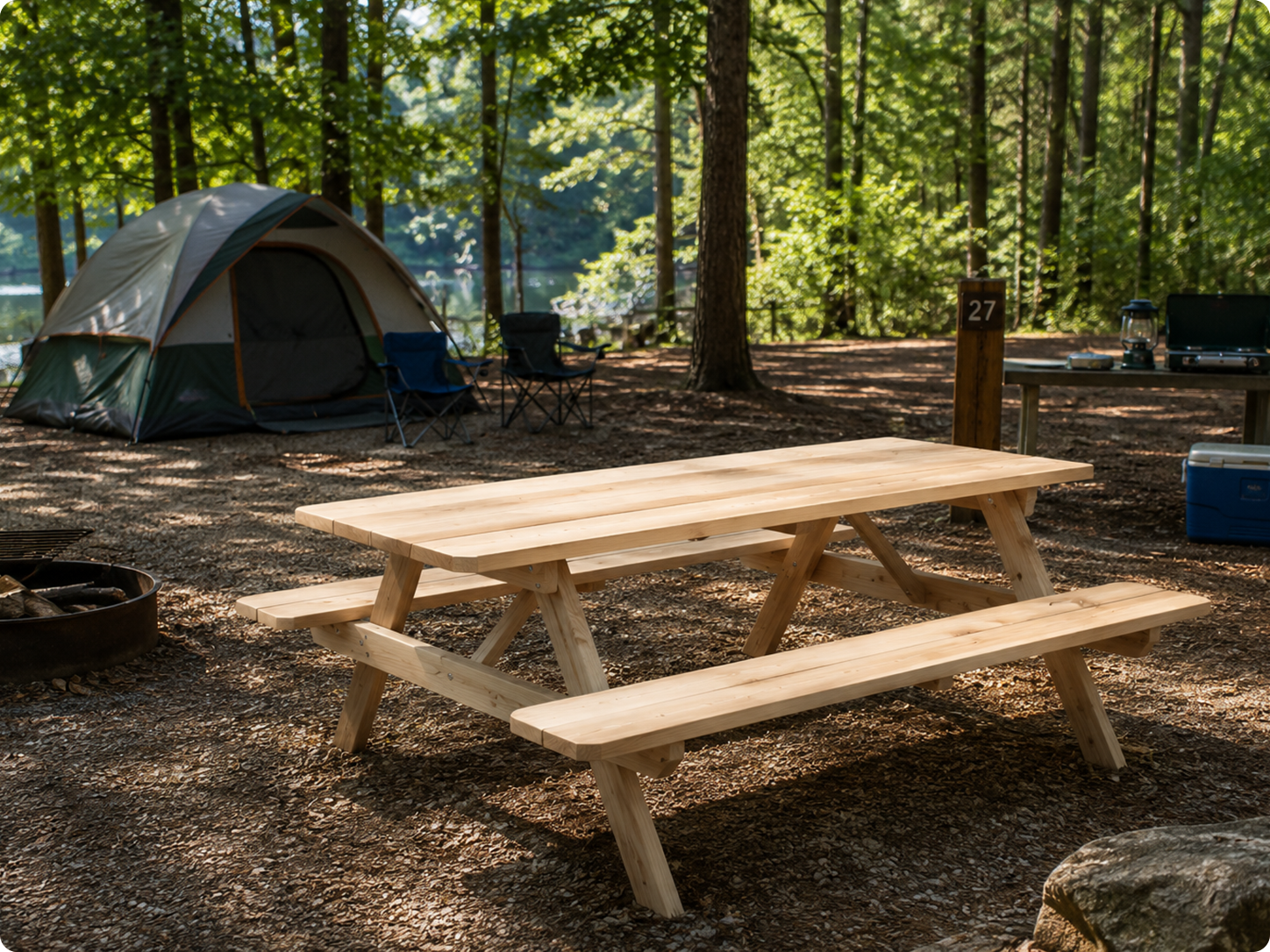
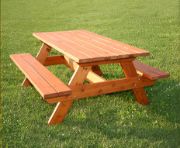
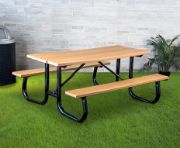
Wood picnic tables provide a classic, natural look that works well in campgrounds, nature parks, trails, and rustic outdoor spaces. The tradeoff is maintenance. Wood typically needs more frequent cleaning, sealing, staining, and inspection.
- Natural appearance for rustic settings
- Can often be refinished or repaired
- Requires more maintenance than most other materials
- May be affected by moisture, splinters, insects, or rot if neglected
Fiberglass Picnic Tables
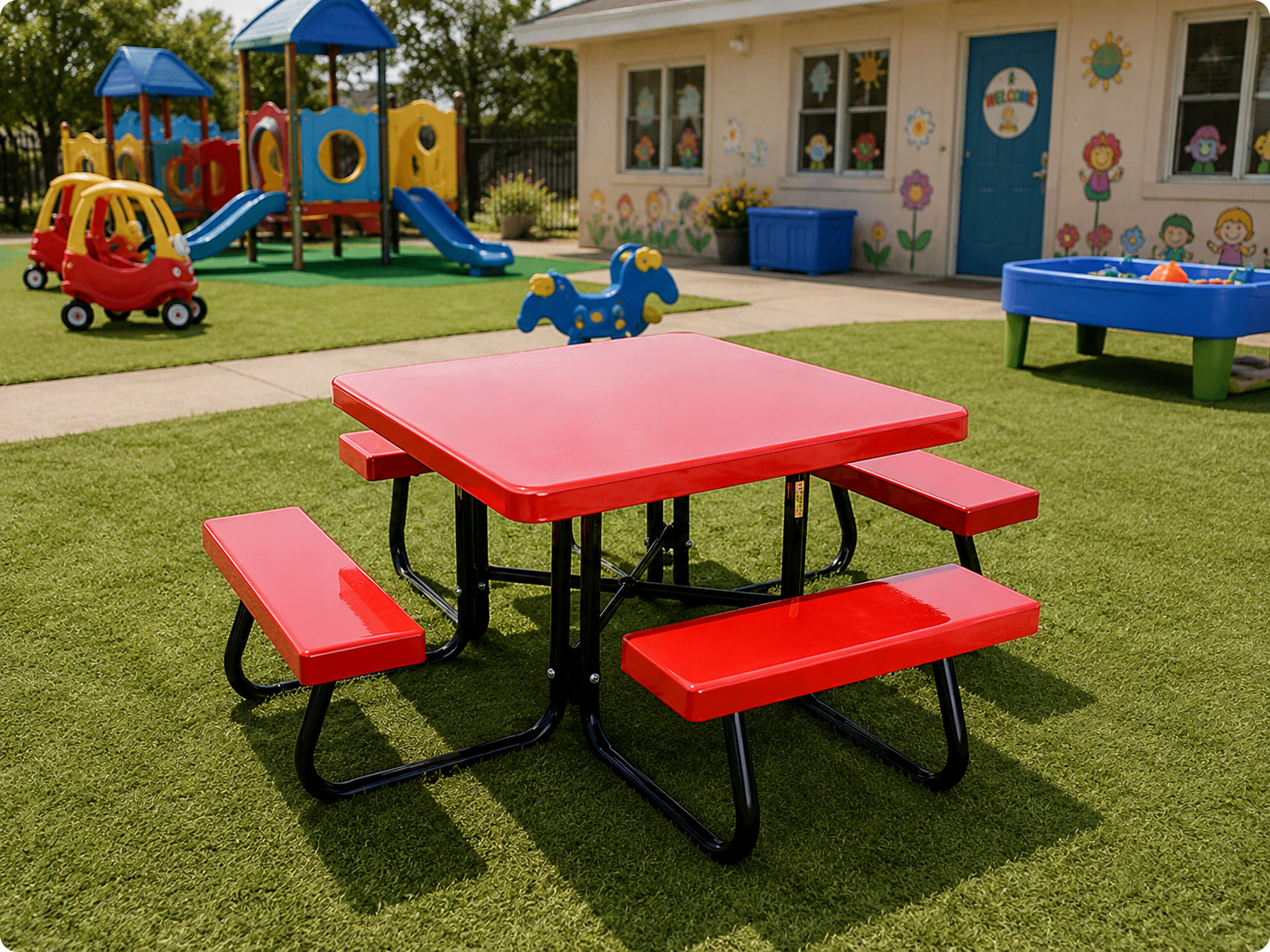
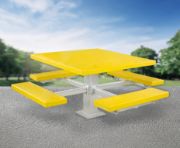
Fiberglass picnic tables are often selected for colorful recreation areas, schools, parks, and spaces that need a bright, clean appearance. They are corrosion resistant and relatively easy to maintain.
- Available in bright color options
- Corrosion resistant
- Good for schools and recreational properties
- Easy to clean and maintain
Concrete Picnic Tables
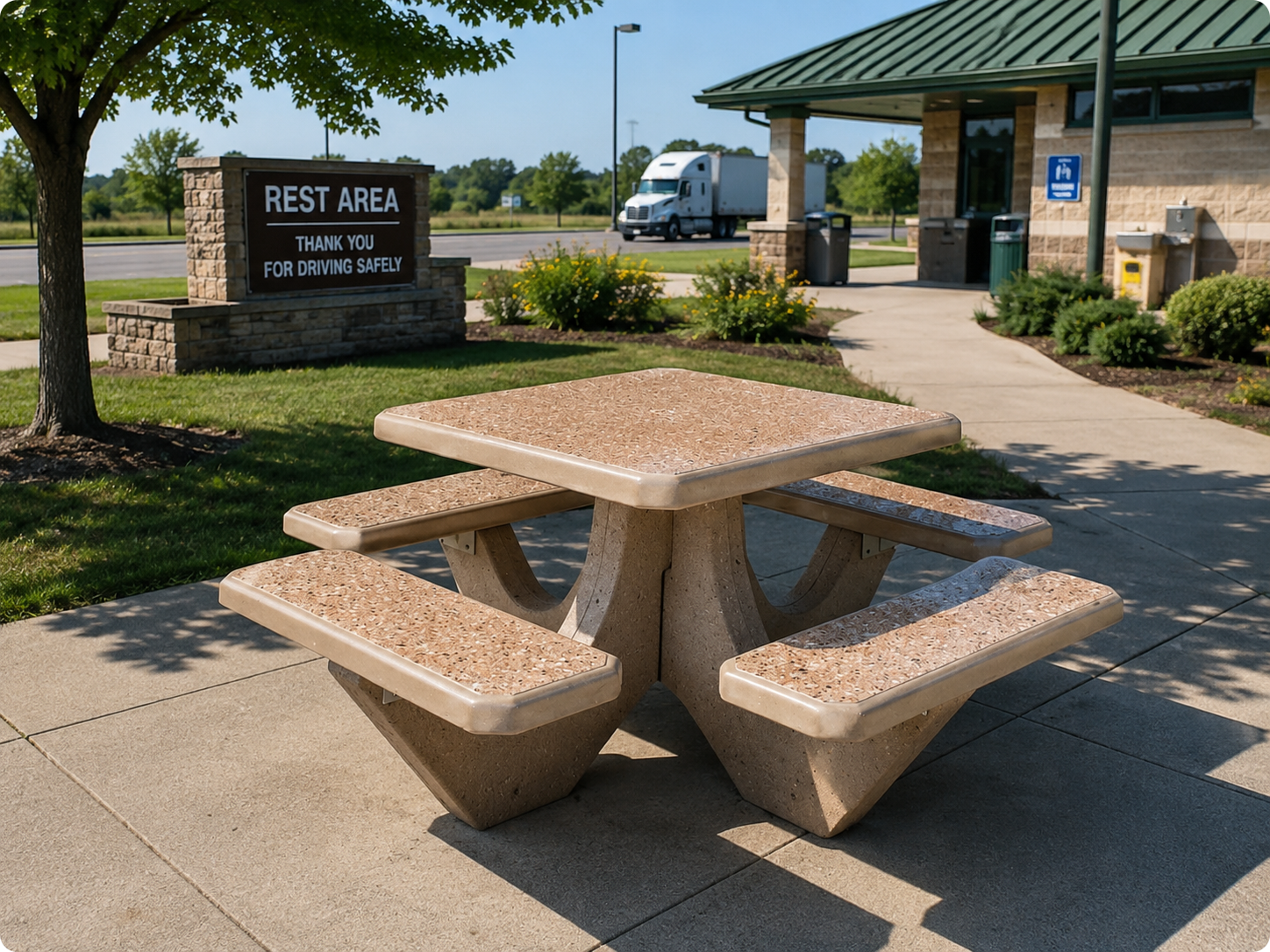
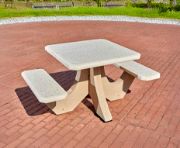
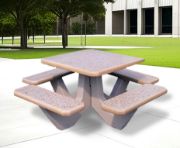
Concrete picnic tables are extremely heavy, permanent, and difficult to move. They are commonly used in municipal parks, public plazas, rest areas, and locations where long-term placement and vandal resistance are important.
- Excellent for permanent installations
- Very low maintenance
- Strong vandal resistance due to weight
- Difficult to move once placed
Commercial Picnic Table Material Comparison Chart
Use this chart as a quick starting point when comparing the most common commercial picnic table materials.
| Material | Cost | Maintenance | Weather Resistance | Vandal Resistance | Weight |
|---|---|---|---|---|---|
| Thermoplastic Steel | $$ | Low | Excellent | Excellent | Heavy |
| Recycled Plastic | $$$ | Very Low | Excellent | Good | Moderate to Heavy |
| Aluminum | $$$ | Low | Excellent | Good | Lightweight |
| Wood | $ | High | Fair | Fair | Moderate |
| Fiberglass | $$ | Low | Good | Good | Moderate |
| Concrete | $$ | Very Low | Excellent | Excellent | Very Heavy |
Which Picnic Table Material Is Best?
There is no single best picnic table material for every property. The best choice depends on your location, budget, maintenance expectations, installation needs, and how much daily use the table will receive.

Best Overall
Thermoplastic steel offers one of the best balances of durability, color options, weather resistance, and long-term value.

Lowest Maintenance
Recycled plastic is a strong choice when the goal is to reduce painting, sealing, staining, or refinishing.

Best Budget Value
Pressure-treated wood usually has the lowest upfront cost, making it a popular choice for budget-conscious projects.
Best Picnic Table Material by Application
| Application | Recommended Material | Why It Works |
|---|---|---|
| Thermoplastic Steel | Durable, colorful, weather-resistant, and designed for public use. |
| Thermoplastic Steel | Handles frequent use, cleaning, and rougher daily conditions. |
| Wood | Looks great, cost-effective, and doesn't get too hot in the sun. |
| Recycled Plastic | Low maintenance with an attractive finished appearance. |
| Wood | Natural appearance that fits rustic outdoor environments. |
| Concrete | Permanent, heavy, and difficult to move or tamper with. |
Beaches & Resorts | Aluminum | Strong option for salt-air and waterfront exposure. |
| Thermoplastic Steel | Good for high-traffic areas that require durability and easy cleaning. |






Choose the Right Material for Your Climate

Coastal Areas
Aluminum is often the safest starting point for salt-air environments because of its corrosion resistance.

Snow and Ice
Thermoplastic steel, recycled plastic, and concrete can perform well in colder regions when maintained properly.

Hot Sun
Color, shade, and surface material all affect heat retention. Consider shade placement in high-sun areas.

Heavy Rain
Concrete, aluminum, recycled plastic, and thermoplastic steel are common options for wet climates.

Humidity
Aluminum, recycled plastic, and thermoplastic steel help reduce many moisture-related maintenance concerns.

Tree Cover
Areas under trees may need materials that are easy to clean because of sap, leaves, pollen, and debris.
Which Picnic Table Materials Get Hot in the Sun?
Commercial picnic table materials respond differently to prolonged sun exposure. While some materials naturally stay cooler than others, factors such as surface color, direct sunlight, ambient temperature, and airflow all influence how hot a tabletop or seat becomes. For example, darker-colored thermoplastic, aluminum, and fiberglass surfaces typically absorb more heat than lighter finishes, while wood often remains more comfortable to the touch.
| Material | Heat Retention | What to Know |
|---|---|---|
| Wood |  Low Low | Usually more comfortable in direct sun than many hard surface materials. |
| Recycled Plastic |  Low to Moderate Low to Moderate | Darker colors may feel warmer in direct sunlight. |
| Fiberglass | Moderate | Color and finish can affect surface temperature. |
| Aluminum |  Moderate to High Moderate to High | Can warm quickly in direct sun, especially without shade. |
| Thermoplastic Steel | Moderate to High | Color, coating, and sun exposure influence comfort. |
| Concrete | Moderate to High | Can absorb and hold heat in open sunny areas. |
Helpful Tip
Shade matters just as much as material. Even materials that typically stay cooler can become hot after prolonged sun exposure. If user comfort is a priority, consider pairing your picnic tables with natural shade or commercial umbrellas.
Which Picnic Table Materials Are Easiest to Repair?
| Material | Repair Difficulty | Common Repair Notes |
|---|---|---|
| Wood | Easy | Can often be sanded, sealed, stained, or refinished. |
| Thermoplastic Steel | Moderate | Minor coating damage should be repaired to protect exposed steel. |
| Recycled Plastic | Moderate | Hardware can be tightened or replaced; damaged boards may require replacement. |
| Fiberglass | Moderate | Surface damage may need specialty repair depending on severity. |
| Aluminum | Difficult | Dents or structural damage may be harder to repair cleanly. |
| Concrete | Difficult | Cracks or chips may require patching or professional repair. |
Expected Lifespan by Material
Actual lifespan depends on climate, use, installation, cleaning, and maintenance.
Common Mistakes When Choosing Picnic Table Materials
- Buying based only on price: The cheapest table upfront may not be the best long-term value.
- Ignoring maintenance: Wood may look great but requires more upkeep than many other materials.
- Forgetting climate: Coastal, snowy, humid, and high-sun environments all affect material choice.
- Choosing portable when mounting is needed: Public spaces may need surface mount or in-ground mount options.
- Underestimating vandalism: Heavy-use public areas need stronger materials and secure placement.
- Overlooking accessibility: Public properties should consider ADA accessible picnic table options.
Annual Maintenance Requirements
| Material | Maintenance Level | Typical Maintenance |
|---|---|---|
| Wood | Cleaning, sanding, sealing, staining, and checking for splinters or rot. | |
| Thermoplastic Steel | Routine cleaning, inspection for chips, and hardware checks. | |
| Aluminum | Cleaning and occasional inspection for dents or fastener issues. | |
| Fiberglass | Cleaning and checking for fading, cracks, or surface wear. | |
| Recycled Plastic | Basic cleaning and occasional hardware inspection. | |
| Concrete | Cleaning, surface inspection, and optional sealing depending on location. |
Frequently Asked Questions About Picnic Table Materials
What is the best overall material for a commercial picnic table?
Thermoplastic steel is often the best overall choice because it balances durability, maintenance, color options, weather resistance, and long-term value.
Which picnic table material lasts the longest?
Concrete and recycled plastic are often among the longest-lasting commercial picnic table materials, depending on use, climate, and maintenance.
Which material requires the least maintenance?
Recycled plastic, aluminum, concrete, and thermoplastic steel usually require less maintenance than wood.
Which material is best for schools?
Thermoplastic steel is a strong choice for schools because it handles heavy use, frequent cleaning, and outdoor exposure well.
Which material is best for coastal areas?
Aluminum is often recommended for coastal and salt-air environments because it resists corrosion well.
Can thermoplastic picnic tables rust?
The coating helps protect the steel, but chips or exposed metal should be repaired to reduce the chance of rust.
Which material is best for campgrounds?
Wood is popular for campgrounds because of its natural look, but thermoplastic steel and recycled plastic may require less long-term maintenance.
Which material is best for permanent public spaces?
Concrete is a strong option for permanent public installations because it is heavy, durable, and difficult to move.
The Bottom Line
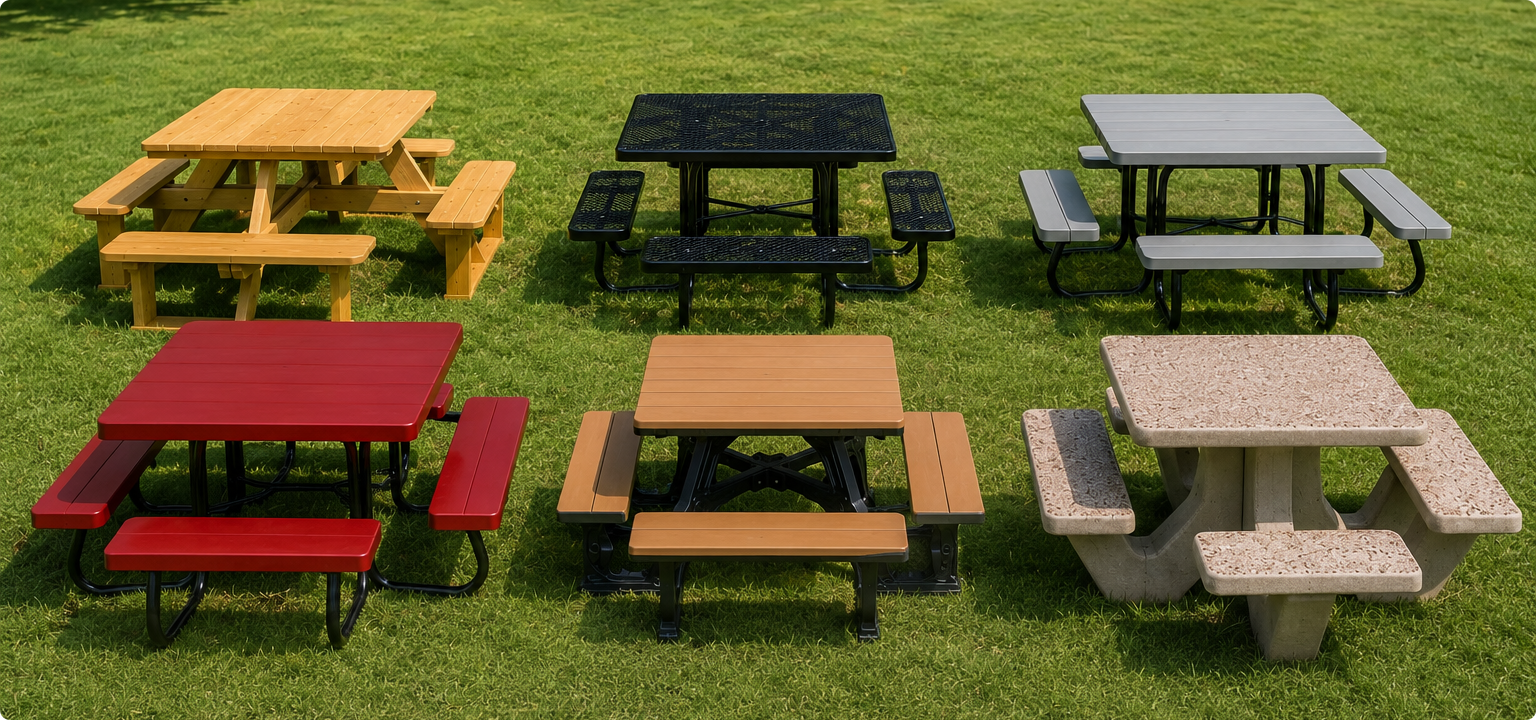
The best picnic table material depends on your property, climate, budget, and maintenance expectations. Choose wood for a natural look, thermoplastic steel for balanced commercial performance, recycled plastic for low maintenance, aluminum for coastal areas, concrete for permanent installations, and fiberglass for colorful recreation spaces.
Browse Picnic Tables by Material
Leave your comment