

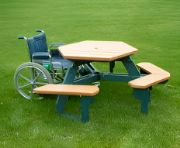
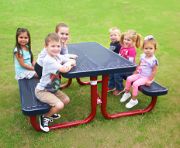
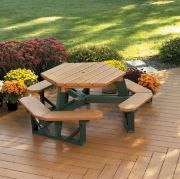
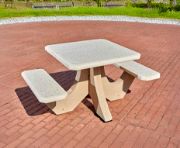

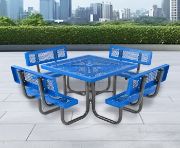
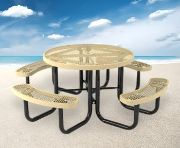
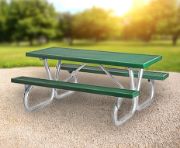
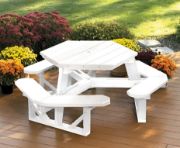
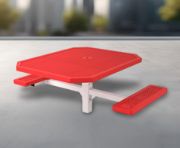
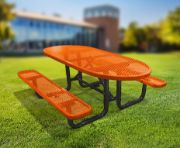
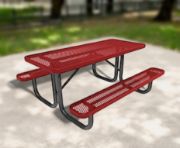
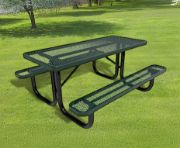







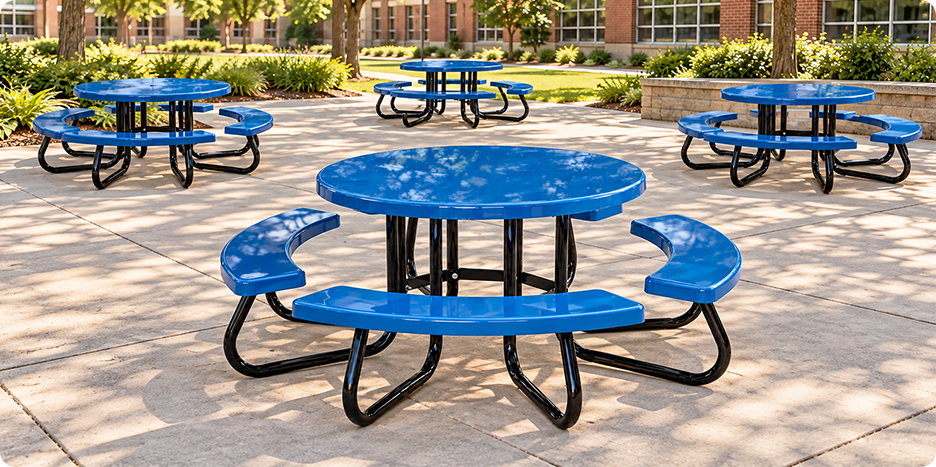
A sticky tabletop, a dull patch, or a loose bench can turn an inviting picnic area into another maintenance task. With fiberglass picnic tables, the most useful approach is a consistent routine: clean gently, check the finish, and inspect the parts supporting it.
This guide explains how to care for the fiberglass surfaces and metal components of a commercial picnic table, handle everyday messes, and decide when a problem needs more than cleaning.
Quick answer: For routine care, start with mild soap, water, and a soft cloth or nonabrasive sponge. Rinse away residue, dry the surface, and check the top, seats, frame, and hardware. Follow your table manufacturer's instructions before using specialty cleaners, protective treatments, or repair products.
 Routine cleaning Mild soap and water
 Cleaning tools Soft cloth or sponge
 Inspection areas Surfaces, frame, hardware
What Is a Fiberglass Picnic Table?
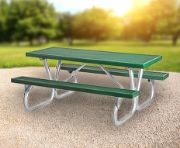
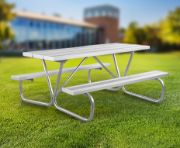
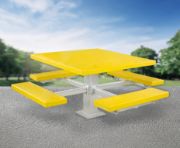
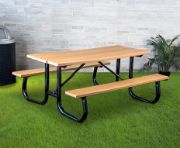
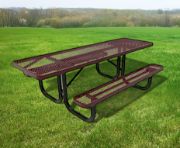
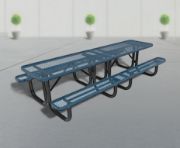
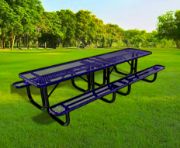
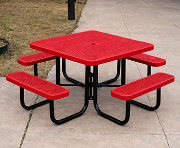
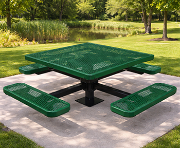
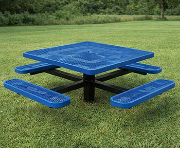
A fiberglass picnic table typically has a tabletop and seats made from glass fibers bonded together with resin, supported by a metal frame. This composite construction provides smooth, solid surfaces for outdoor dining, writing, and activities. Many commercial fiberglass picnic tables use galvanized or powder-coated steel frames.
What Finish Is Used on the Top and Seats?
Fiberglass tabletops and seats commonly feature a gel-coat finish—a resin-based outer layer that provides color and a smooth, often glossy surface. The fiberglass underneath reinforces the component, while the gel coat forms the surface you touch and clean.
Maintenance involves caring for both this protective finish and the table's supporting structure. Gentle cleaning helps preserve the gel coat, while inspections help identify chips, cracks, loose hardware, and frame damage.
Confirm the right care products: Before choosing supplies, identify the model, finish, and frame material. Keep the care instructions with your maintenance records. If the table has a gel-coat finish, confirm which cleaners and treatments are approved for that finish rather than borrowing advice intended for a boat, bathtub, or different fiberglass product.
Still comparing materials for your property? Our commercial picnic table material guide explains how fiberglass fits alongside other outdoor seating options.
How to Clean a Fiberglass Picnic Table
Gather a bucket, mild soap, clean water, a soft cloth or nonabrasive sponge, and a clean drying towel. Choose a time when the table is cool enough that the cleaning solution will not dry immediately.
- Remove loose debris. Lift away leaves and food scraps, then gently rinse off grit before wiping. Avoid dragging dirt across the finish.
- Wash in small sections. Use diluted mild soap and light pressure. Work across the tabletop, seat surfaces, and edges, keeping the cloth clean as you go.
- Give stuck-on residue time to soften. Hold a damp, soapy cloth against dried food briefly, then wipe again. Skip metal scrapers and aggressive scrubbing.
- Rinse thoroughly. Remove soap and loosened dirt with clean water. Include edges and areas around fasteners where residue collects.
- Dry and check. Wipe with a clean towel and look for chips, rough spots, cracks, or changes in the finish that were hidden by dirt.
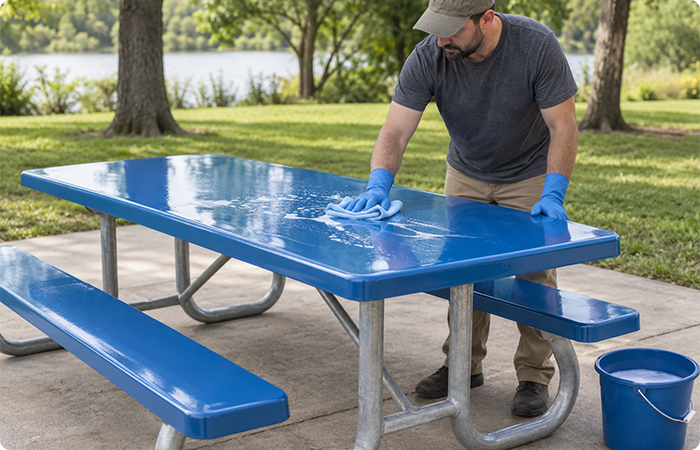
Make cleanup easier: Keep a small supply kit near busy outdoor dining areas. Promptly wiping up spills reduces the need to tackle dried residue later.
Handling Common Stains and Outdoor Buildup
Start with the gentlest approved method. If a mark remains, identify the residue before trying a stronger cleaner. Test an approved product in a discreet area and stop if the finish changes color, softens, or loses gloss.
| What you find | Practical first step |
|---|---|
| Food and drink spills | Wipe up promptly, wash with mild soapy water, and rinse. Soften dried residue before wiping again. |
| Pollen, dust, and leaves | Remove loose material and rinse before washing. Check shaded corners and seat edges for accumulated debris. |
| Bird droppings | Dampen the deposit before removing it with a disposable cloth and appropriate gloves. Clean the area without dry scraping. |
| Sunscreen or greasy residue | Try mild soap and a clean soft cloth. Repeat with fresh wash water rather than spreading the residue. |
| Tree sap, paint, or marker | Ask the manufacturer for an approved removal product. Do not experiment with paint thinner, acetone, or abrasive pads. |
| Recurring green or dark buildup | Clean away surface debris and review shade, moisture, and cleanup frequency. Ask about an approved treatment if ordinary washing is insufficient. |
If your facility also requires sanitizing or disinfecting, treat that as a separate step from removing visible dirt. Use a product compatible with the finish and follow its label for dilution, contact time, and any required rinse. Do not assume ordinary soap washing satisfies your facility's sanitation procedures.
Protecting the Finish from Wear
Outdoor exposure can gradually change a fiberglass surface's color or gloss. Shade can reduce direct sun exposure, while routine cleaning makes it easier to spot changes early. Avoid placing hot cookware, grills, or abrasive equipment directly on the table.
Waxing is not a universal requirement. Before applying wax, polish, or a UV treatment, confirm that the manufacturer approves it for the specific finish and for use on tabletops or seats. A product recommended for another fiberglass surface may be unsuitable here.
If a clean surface remains dull or leaves a chalky residue, photograph the area and request finish-specific guidance. Do not start sanding, buffing, or painting as a routine maintenance step.
Inspect the Frame, Hardware, and Mounts
A clean top does not tell you whether the whole table is ready for use. Include the underside and support structure in your checks.
- Fasteners: Check for missing, loose, or damaged bolts, nuts, and washers. Tighten according to the assembly instructions; avoid overtightening connections against fiberglass.
- Frame: Look for corrosion, damaged protective coatings, bent supports, and visibly cracked welds.
- Mounts and footing: Check for movement at anchors, damaged mounting points, and uneven or settling ground.
- Top and seats: Inspect edges, corners, attachment points, and undersides for cracks, separation, or unusual movement.
Report recurring looseness instead of repeatedly tightening the same connection. For facilities with several materials, keep separate care instructions; our aluminum picnic table maintenance guide covers that surface's cleaning and inspection needs.
When Chips or Cracks Need More Than Cleaning
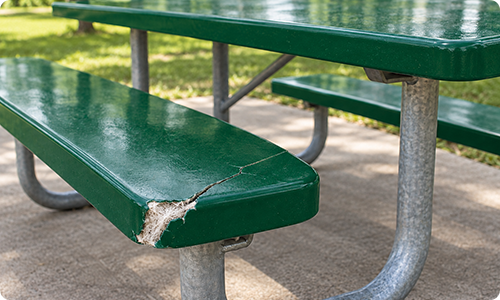
A stain, a dull finish, and a crack near a seat attachment require different responses. Start by identifying whether the issue involves surface residue, finish wear, or damage that could affect safe use.
Use the guide below to choose your next step. If you are unsure whether damage is cosmetic or structural, keep the table out of service until it has been assessed.
| What you notice | Next step |
|---|---|
| Dirt, sticky residue, or surface stains | Begin with mild soap, water, and a soft cloth. Rinse, dry, and reassess before trying an approved specialty cleaner. |
| Persistent dullness or chalky residue | Request guidance for the specific finish before polishing, waxing, or refinishing. Cleaning alone may not resolve finish wear. |
| Exposed fibers, sharp edges, unstable seating, or suspected structural cracks | Remove the table from service and contact the supplier or manufacturer for an assessment. Do not cover the damage with paint or generic filler. |
Before requesting repair guidance, locate the model number and photograph both the affected area and the whole table. Ask whether the component can be repaired, needs replacement, or requires an on-site assessment.
Useful maintenance record: Note the table location, inspection date, problem, photos, and action taken. This helps staff track whether damage is new, recurring, or getting worse.
A Practical Fiberglass Table Maintenance Schedule
Use this as a starting point, then adjust for traffic, weather, and manufacturer requirements. A busy school lunch area needs more frequent attention than a lightly used picnic shelter.
| When | Suggested tasks |
|---|---|
| Before opening a busy picnic area | Check for obvious damage, unstable seating, sharp edges, and debris before guests arrive. Keep any table with suspected safety issues out of service until assessed. |
| After spills or heavy use | Remove food and litter, clean sticky spots, and check for obvious damage. |
| Weekly during regular use | Wash as needed, inspect top and seat edges, and check for wobbling or loose components. |
| At seasonal opening and closing | Inspect the entire frame, hardware, mounts, underside, and finish. Document repair needs. |
| After storms, impacts, or relocation | Check stability, supports, anchoring, and surfaces before returning the table to service. |
What to record: Inspection date, table location or ID, observed damage, cleaning or repair action, and whether the table remains available for use.
Near pools or salt air, include residue removal and closer frame checks in the routine. Under trees, plan more frequent debris cleanup. Before seasonal storage, clean and dry the table, follow the manufacturer's moving instructions, and avoid dragging it by the seats.
Frequently Asked Questions
Can you pressure wash fiberglass picnic tables?
Use a gentle hose rinse as your starting point. Pressure wash only if the table manufacturer permits it and provides suitable settings and technique. There is no single pressure setting appropriate for every fiberglass finish or condition.
Can you use bleach on a fiberglass picnic table?
Do not assume bleach is compatible with the finish or metal components. Confirm an approved product and dilution with the manufacturer, then follow the cleaner's label. Never mix cleaning products.
Do fiberglass picnic tables rust?
The fiberglass surface does not rust, but steel frames, fasteners, or mounting hardware can corrode. Inspect those components even when the tabletop still looks good.
Can a faded fiberglass table be restored?
Sometimes a manufacturer-approved finish treatment or professional repair is an option. Cleaning should come first so you can assess the actual surface. Restoration depends on the finish and condition; polishing cannot resolve structural damage.
Keep Your Picnic Area Ready for the Next Guest
A manageable care routine starts with gentle cleaning and a quick look at the whole table. Address spills promptly, keep track of wear, and ask for guidance before treating an unfamiliar finish or repairing a damaged component.
Planning new seating or replacing an older table? Explore our fiberglass selection or contact Picnic Table Supplier for help identifying product options and available care information.
Shop Fiberglass Picnic Tables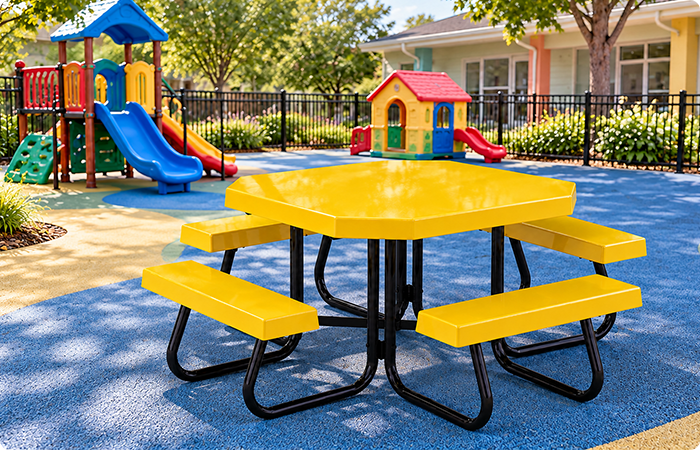
Leave your comment