
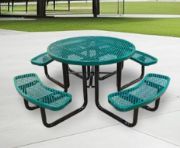
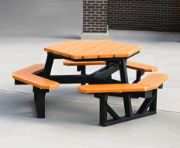
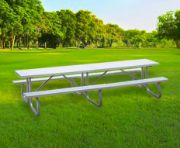
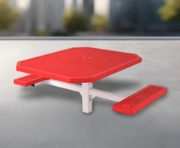

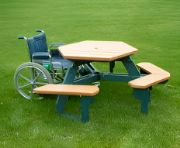
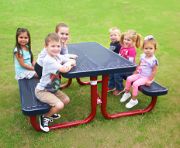
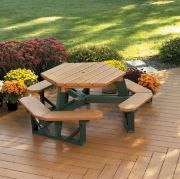
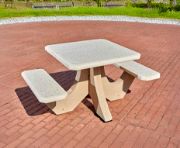
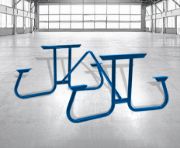
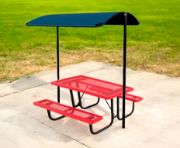
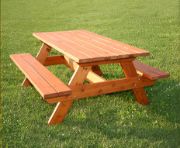
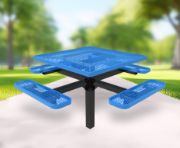
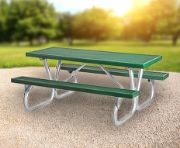
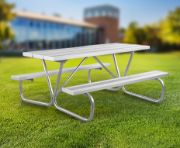
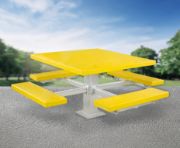
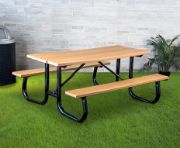
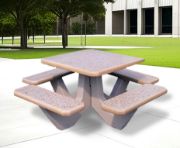
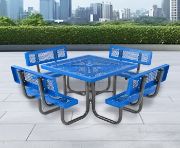
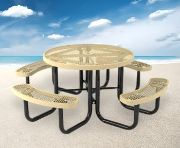
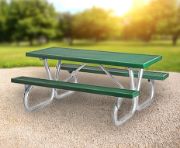
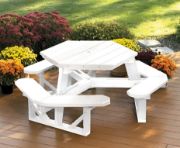
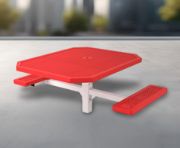
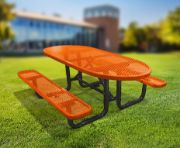
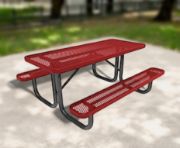
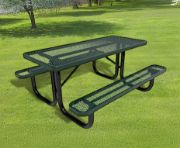
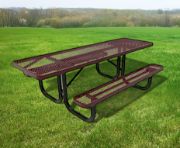
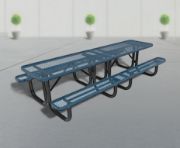
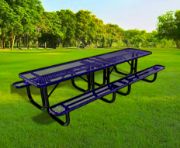
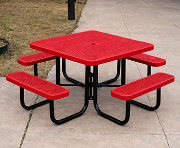
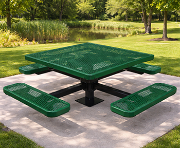
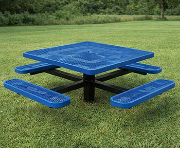






Commercial in-ground mount picnic tables are commonly specified for parks, schools, campgrounds, recreation areas, outdoor dining spaces, and other commercial properties where permanent seating is preferred. Unlike portable picnic tables, in-ground picnic tables are anchored below grade using concrete footings, helping prevent movement, theft, and unauthorized relocation.
For facility managers, park directors, HOA boards, resort operators, school administrators, purchasing agents, and municipal planners, choosing the right in-ground mounting style requires more than selecting a table size or material. The frame design, installation method, maintenance access, replacement concerns, and long-term site plans should all be considered before purchasing.
This guide explains the different types of in-ground picnic tables, how they are installed, what buyers should consider, and which mounting option may be best for different commercial applications.
Why Choose an In-Ground Mount Picnic Table?

In-ground picnic tables are often selected when outdoor furniture needs to remain in a fixed location for many years. Because the frame or anchoring system is secured into concrete footings below the surface, this mounting style is commonly used in public spaces where stability, security, and permanent placement are important.
One major advantage of an in-ground installation is that it does not require an existing concrete slab, patio, or other hard surface. Surface-mounted picnic tables typically require a stable mounting surface such as concrete or asphalt. In-ground picnic tables, however, can be installed directly into grass, soil, landscaped areas, and other locations where no suitable mounting surface currently exists.
This allows property owners to create permanent seating areas without the added expense of pouring a large concrete pad. For parks, campgrounds, trail systems, nature preserves, and recreational properties, this can significantly reduce site preparation costs while still providing a secure installation.
In-ground mounting is commonly chosen when:
- A stable installation is needed where no concrete surface currently exists.
- The project budget does not include constructing a concrete patio or slab.
- The picnic table will be installed in grass, soil, or landscaped areas.
- The table needs to remain in a fixed location for many years.
- Theft prevention is a concern.
- High winds or public use could move portable furniture.
- Site plans call for permanent seating locations.
- Public safety and liability concerns require a more secure installation.
In-ground mounting is commonly specified for public parks, school campuses, universities, campgrounds, HOA common areas, resort properties, municipal recreation spaces, trailheads, and outdoor gathering areas where long-term placement and site stability are priorities.
Design Advantages of In-Ground Picnic Tables
Many buyers focus on security and permanence when evaluating in-ground picnic tables, but there are also important design advantages that can improve the appearance and function of a site.
When an in-ground picnic table is installed before a concrete patio, sidewalk, or plaza is poured, the frame supports can be embedded below grade and finished into the concrete surface. This creates a cleaner, more seamless appearance because the hardware and lower frame supports are hidden underground.
This installation method can help reduce exposed mounting plates, anchor bolts, surface hardware, or frame components that could create visual clutter or potential trip points around the table. For parks, plazas, universities, resorts, and commercial patios, this can create a more permanent architectural look than surface-mounted alternatives.
This type of installation is especially useful for:
- New concrete patio projects
- Public plazas
- Outdoor dining courts
- University courtyards
- Resort seating areas
- Municipal park upgrades
The Different Types of In-Ground Mount Picnic Tables
Pedestal In-Ground Picnic Tables

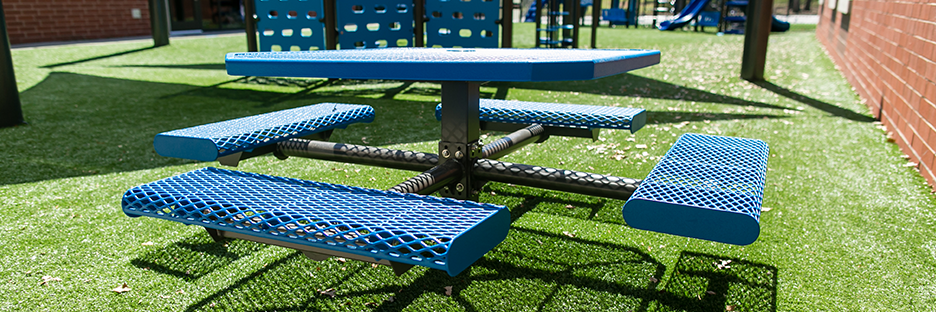
Pedestal in-ground picnic tables are designed with minimal frame contact at the ground surface. A center-mounted pedestal supports the tabletop and seating area while keeping the perimeter beneath the table more open.
This design is often chosen because it makes cleaning and maintenance easier. Maintenance crews can mow, trim, sweep, or wash around the table with fewer frame obstructions compared to traditional leg-style frames.
Longer picnic tables may use a double-pedestal configuration for additional support and stability. This allows the table to maintain an open appearance while providing better weight distribution for larger seating layouts.
Pedestal in-ground picnic tables are often a strong choice for parks, schools, restaurants, resorts, and commercial outdoor dining spaces where both appearance and maintenance access matter.

Web or Nexus In-Ground Picnic Tables

Web or Nexus picnic table frames are designed to support the bench seats while also looping upward beneath the tabletop. This frame layout provides strong structural support while creating additional leg room for users.
This style is commonly selected for high-use public spaces because it offers a balance of stability, comfort, and support. The frame design helps carry weight beneath the seats while keeping the center area more open than some traditional frame styles.
Web and Nexus in-ground picnic tables are frequently used in parks, schools, universities, campgrounds, recreation centers, and outdoor break areas.

Surface Mount Tabs with In-Ground J-Bolts

Surface mount tabs with in-ground J-bolts offer a major advantage that traditional in-ground picnic tables usually cannot provide: future relocation.
In this design, steel mounting tabs are welded directly onto the picnic table frame. Instead of cementing the frame itself into the ground, J-bolts are embedded into concrete footings below grade and connected to the surface mount tabs.
This creates a secure in-ground installation while keeping the actual picnic table frame removable. Because the frame is not permanently encased in concrete, the table can be disconnected and relocated later if site plans change.
This option is especially helpful for parks, schools, HOAs, campgrounds, and municipal properties that may redesign outdoor spaces in the future. It provides much of the security of an in-ground installation while preserving the ability to move or replace the picnic table later.
Another long-term benefit is replacement flexibility. After 20 or more years of use, the seats and tabletop may need replacement due to weather exposure, UV damage, heavy use, or general wear. However, replacement parts may no longer be available for the original frame because manufacturers often update product designs, mounting patterns, accessibility features, and style details over time.
With a traditional embedded-frame installation, replacing the entire picnic table may require removing concrete or excavating around the original supports. With surface mount tabs and in-ground J-bolts, the table can be removed from the embedded hardware, making future relocation or replacement more practical.

In-Ground Mount Clamps

In-ground mount clamps are used when a portable picnic table needs to be converted into a more permanent ground-mounted installation. The clamps loop around the existing frame tubing and connect the table to an anchoring system below grade.
This option can be useful when a property already owns portable picnic tables but now needs them secured in a fixed location. It may also help avoid drilling into the existing frame, which could affect the frame warranty or structural integrity.
Correct sizing is important. The clamp must match the frame tubing size to create a secure fit. Before ordering in-ground mount clamps, buyers should confirm the frame shape and tubing dimensions of the existing picnic table.

Comparing In-Ground Picnic Table Mounting Styles
| Style | Best For | Advantages |
|---|---|---|
| Pedestal | Parks, schools, dining areas | Minimal ground contact, easier cleaning, and an open appearance |
| Web or Nexus | High-use public spaces | Additional leg room and strong structural support |
| Surface Mount Tabs with J-Bolts | Facilities expecting future site changes | Can be relocated or replaced without removing embedded footings |
| In-Ground Mount Clamps | Retrofit projects | Converts existing portable tables into permanent seating |
Key Buying Factors Before Choosing an In-Ground Picnic Table
Site Maintenance Requirements
Maintenance access should be considered before choosing a frame style. Pedestal designs usually make mowing, trimming, sweeping, and pressure washing easier because there are fewer frame components touching or crossing the ground surface.
Future Site Changes
Traditional in-ground picnic tables are difficult to relocate once installed. If a park, school, campground, or HOA may redesign the space later, surface mount tabs with in-ground J-bolts may be the better choice because the picnic table frame can be removed and relocated.
Concrete and Installation Planning
In-ground picnic tables require excavation and concrete footings. This means installation should be planned before landscaping, hardscaping, or patio construction is completed. When installed before a concrete slab is poured, the finished area can have a cleaner appearance with no exposed mounting hardware.
Long-Term Replacement Concerns
Commercial buyers should consider what may happen 20 or more years after installation. Even if the frame remains usable, the seats and tabletop may eventually need replacement. Since product designs may change over time, replacement parts may not fit older frames. This is one reason removable systems, such as surface mount tabs with in-ground J-bolts, can be valuable for long-term planning.
Accessibility Requirements
If the picnic table is intended for a public or commercial space, accessibility should be considered before installation. ADA-compliant picnic tables require proper clearances, accessible routes, and usable seating positions. Once an in-ground table is installed, changing its position can be difficult unless a removable mounting method is used.
What Is Needed to Install an In-Ground Picnic Table?
Most in-ground picnic table installations require:
- Concrete mix or ready-mix concrete
- Post hole digger, shovel, or auger
- Gravel, if specified by the manufacturer or site plan
- Level
- Measuring tape
- Temporary bracing materials
- Concrete mixing tools or access to ready-mix concrete
- Safety equipment
- Manufacturer installation instructions
Installation requirements vary by frame design, soil conditions, table size, and local project requirements. Always review the manufacturer’s installation details before beginning work.
How to Install an In-Ground Mount Picnic Table
1. Confirm the Final Location
Choose the installation location and verify that there is enough space for seating access, pedestrian movement, maintenance equipment, and ADA clearance if required.
2. Mark the Footing Locations
Mark the locations where the pedestal, legs, clamps, or J-bolt footings will be installed. Accurate layout is important because in-ground tables are difficult to adjust after the concrete cures.
3. Excavate the Footing Holes
Dig the footing holes according to the manufacturer’s recommendations. Hole depth and diameter may vary based on table size, frame style, soil conditions, and local requirements.
4. Set the Frame or Anchoring Hardware
Depending on the mounting style, either place the frame supports into the footing holes or position the J-bolts or clamp anchoring system. Make sure the table or hardware is aligned correctly before pouring concrete.
5. Brace and Level the Table
Use temporary bracing to hold the table or anchoring hardware in place. Confirm that the tabletop and seats are level and that the table is positioned correctly.
6. Pour the Concrete
Pour concrete into the footing holes while keeping the frame or anchoring hardware properly aligned. Avoid shifting the table during the pour.
7. Allow the Concrete to Cure
Allow the concrete to cure according to the manufacturer’s recommendations before placing the picnic table into service.
How Much Concrete Is Required to Install an In-Ground Picnic Table?
There is no single concrete amount that applies to every in-ground picnic table. The amount needed depends on the number of mounting points, hole diameter, hole depth, table size, frame design, and soil conditions.
Many commercial picnic tables use several individual concrete footings instead of one large concrete pad. For example, a pedestal table may require fewer footing points than a Web or Nexus frame with multiple leg supports.
Before purchasing concrete, review the manufacturer’s installation drawings and calculate the volume needed for each footing. A common mistake is assuming that all in-ground picnic tables require the same concrete depth or footing size.
What Surfaces Can In-Ground Picnic Tables Be Installed On?
In-ground picnic tables are typically installed in areas where excavation is possible. They are commonly placed in grass, soil, landscaped areas, parks, campgrounds, and open recreation spaces.
They can also be integrated into concrete patios, sidewalks, and plazas when installed before the slab is poured. This creates a cleaner finished look because the frame supports or hardware can be concealed below the final concrete surface.
Common installation areas include:
- Grass areas
- Soil or landscaped spaces
- Campgrounds
- Park recreation areas
- School grounds
- New concrete patios
- Public plazas
- Outdoor dining spaces
Common Mistakes to Avoid
Choosing a Mounting Style Without Considering Future Changes
Permanent in-ground installations are difficult to relocate. If the site may be redesigned later, consider surface mount tabs with in-ground J-bolts instead of a frame that is permanently cemented into the ground.
Installing Before Confirming ADA Clearances
Once an in-ground picnic table is set in concrete, correcting spacing issues can be costly. Always confirm accessible routes, seating clearances, and surrounding space requirements before installation.
Assuming Replacement Parts Will Always Be Available
After decades of use, tabletops and seats may need replacement. However, compatible parts may no longer be manufactured if the product design has changed. Buyers should consider whether the entire table can be removed or replaced later.
Overlooking Maintenance Access
Some frame styles make mowing, trimming, and cleaning harder than others. Maintenance crews should be considered during the planning phase, not after installation.
Using the Same Concrete Plan for Every Table Style
Different frame styles may require different footing sizes and placement. Always follow the installation instructions for the specific picnic table being installed.
Applications and Use Cases
Municipal Parks
In-ground picnic tables are commonly used in city and county parks where furniture needs to remain in fixed locations and resist unauthorized movement.
Schools and Universities
Schools often choose in-ground tables for outdoor lunch areas, courtyards, and campus gathering spaces where safety, stability, and organized layouts are important.
Campgrounds
Campgrounds frequently use in-ground picnic tables to keep seating assigned to specific campsites and reduce the risk of tables being moved between areas.
HOA Communities
HOA common areas may benefit from in-ground tables in playgrounds, pool areas, walking trails, and outdoor amenity spaces.
Resorts and Outdoor Dining Areas
For properties focused on appearance, in-ground tables installed before concrete is poured can create a clean, integrated look without exposed hardware.
Frequently Asked Questions About In-Ground Picnic Tables
Are in-ground picnic tables more secure than portable picnic tables?
Yes. In-ground picnic tables are much harder to move or remove because they are anchored below grade with concrete footings.
Can an in-ground picnic table be relocated later?
Traditional in-ground picnic tables are difficult to relocate because the frame is often cemented into the ground. However, surface mount tabs with in-ground J-bolts can allow the picnic table frame to be removed and relocated because only the anchoring hardware is embedded in concrete.
Can a portable picnic table be converted to an in-ground mount?
In some cases, yes. In-ground mount clamps may allow a portable picnic table frame to be secured to the ground. The correct clamp size must be selected to fit the existing frame.
Do in-ground picnic tables require a concrete slab?
No. Most in-ground picnic tables use individual concrete footings. However, they can be integrated into a concrete patio or plaza if installed before the slab is poured.
Which in-ground picnic table style is easiest to maintain?
Pedestal in-ground picnic tables are often easiest to maintain around because they have less frame contact with the ground surface.
What happens if the seats or tabletop need to be replaced decades later?
Replacement may be difficult if the original product design has changed and compatible parts are no longer available. This is why long-term buyers should consider whether the mounting system allows the entire table to be removed or replaced later.
Choosing the Right Commercial In-Ground Picnic Table
The best in-ground picnic table depends on the site, maintenance requirements, security concerns, appearance goals, and long-term ownership plans.
Pedestal styles are a strong option where easy cleaning and an open appearance are important. Web and Nexus frames provide additional leg room and support for high-use spaces. Surface mount tabs with in-ground J-bolts offer the most future flexibility because the table can be relocated or replaced later. In-ground mount clamps may be useful when converting an existing portable table into a fixed installation.
For commercial buyers, the best decision is not always the table that seems easiest to install today. It is the table that supports the property’s long-term use, maintenance plan, accessibility needs, and future replacement strategy.